Brand building is rarely one dimensional work. It demands curiosity, strategy, storytelling and an ability to see the bigger picture long before anyone notices the details.
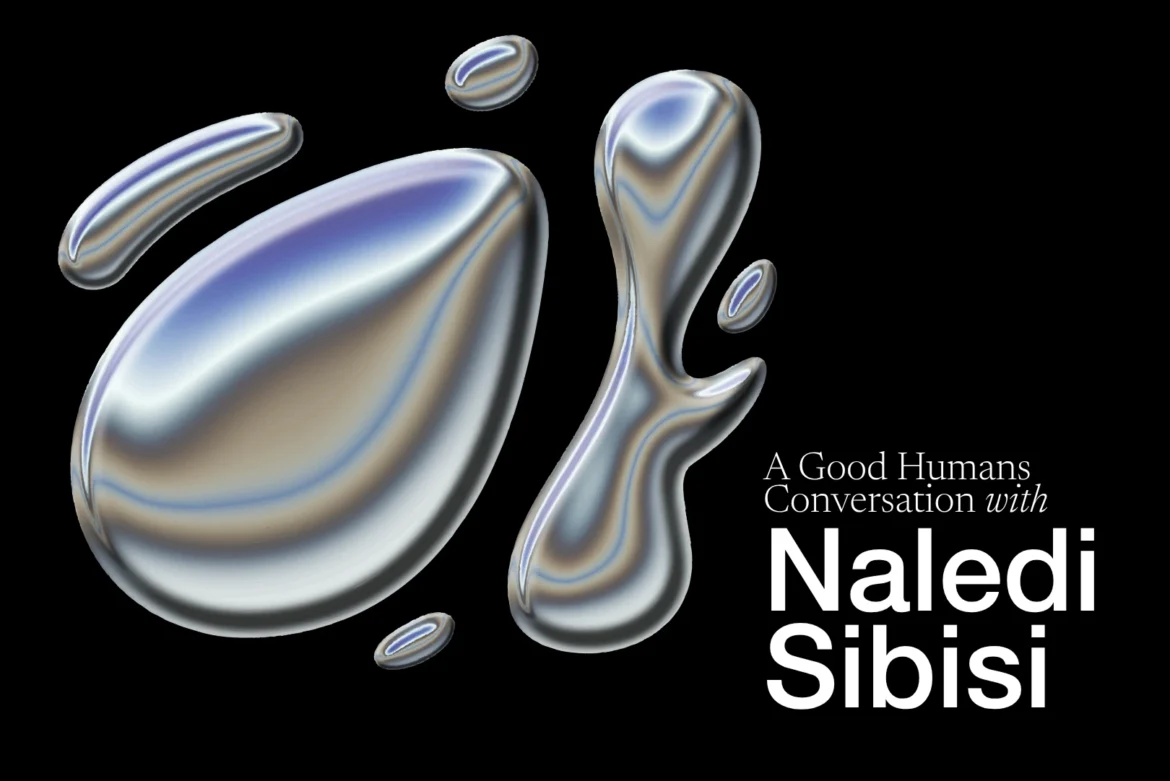
For our first Good Humans conversation, we spoke to multidisciplinary brand designer Naledi Sibisi, whose work spans brand identity, creative direction and visual storytelling. Alongside two featured projects, we wanted to step away from the finished work and explore the thinking behind it – how she approaches creative challenges, what continues to shape her practice, and why building better brands is about far more than delivering great design.
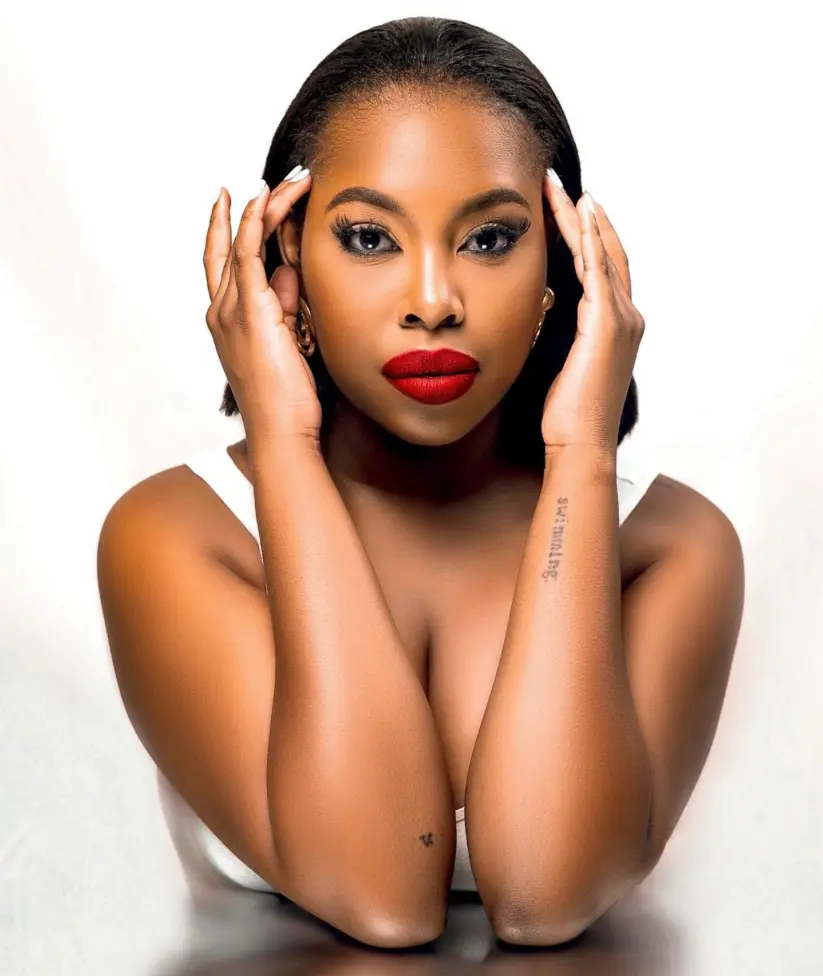
GH: For those discovering your work for the first time, could you tell us about yourself and your creative practice?
NS: I’m a writer, designer and visual storyteller, although I’ve never really felt that one title adequately captures what I do. I was born in Zambia and grew up between Zambia and South Africa, and I think that experience of navigating different cultures and perspectives has informed so much of how I see the world and, by extension, how I approach my work.
Writing was my first love. I studied English Literature, Media Writing and Gender Studies at UCT, and my career began in editorial, which is really where my relationship with visual storytelling developed. I became fascinated by the way words and images could work together to communicate something that neither could necessarily achieve on its own. Today, my practice moves between brand identity, editorial design, art direction and creative storytelling. The common thread has always been an interest in people, identity and culture, and finding interesting ways to make those things visible and, more importantly, felt.
GH: You work across brand identity, creative direction and visual storytelling. How do those disciplines come together when you’re building a brand?
NS: I think they all speak to the same instinct, which is storytelling. I don’t necessarily see them as separate disciplines because, to me, they’re different ways of communicating the same idea. I often describe it as speaking the same language in different accents. I believe that if you’re a creative, you have multiple disciplines inside you by default.
My background in writing means I’m always thinking about the narrative first. What are we actually trying to say? Who are we speaking to? What do we want someone to feel when they encounter this brand? The creative direction then becomes about building a world around that narrative, and the design gives it a visual language. I’m particularly interested in the relationship between words and images. Sometimes a single image can communicate something that would take paragraphs to explain, and sometimes a few carefully chosen words can completely transform how we experience an image. I love that exchange.
Ultimately, I’m trying to create something that feels cohesive, where every element belongs to the same conversation.
GH: How would you describe your approach to building brands? Has it changed over time?
NS: I would describe my approach as intuitive, but very considered. I’m interested in understanding the identity of something before trying to give it an identity, if that makes sense.
I’ll give you an example. Recently, I noticed that a particular colour kept finding its way into my conceptual work – oxblood. These were completely different projects, with different identities and creative directions, so I became curious about why I was repeatedly drawn to this particular shade instead of a more conventional red. The more I thought about it, the more I realised that oxblood felt like red that had matured. It still carries the same intensity, warmth and passion, but there’s a certain depth and restraint to it. And I found that quite interesting because, in many ways, it reflected something I was recognising in my own creative evolution.

My work is maturing, my perspective is changing, and perhaps even the colours I’m drawn to are communicating that before I’ve consciously found the words for it. I love those moments when the creative process reveals something about you that you weren’t necessarily looking for.
I think my editorial background plays a significant role here because I’ve always approached projects with a certain curiosity. I want to understand the context, the people, the history and the intention behind what I’m creating. And sometimes that means asking questions that don’t necessarily appear to have anything to do with design. Over time, I’ve become more comfortable trusting that process and allowing ideas to develop rather than immediately trying to arrive at a visual solution. There’s always the temptation to jump straight into making something beautiful because that’s the exciting part, but I’ve learned that the thinking behind the work is just as important.
I also think I’ve become less interested in creating something simply because it looks good and more interested in whether it feels truthful to what it’s representing.
GH: What do you think separates a good brand from a truly memorable one?
NS: I think a memorable brand understands itself. You can create something visually beautiful, technically perfect even, and it can still leave you feeling absolutely nothing. The brands that remain memorable to me tend to have a very clear sense of identity. I don’t necessarily think that comes from doing the most. Sometimes it’s an incredibly simple visual decision, a particular tone of voice or the consistency with which a brand communicates its values. Jacquemus is a brand that’s particularly great at this.
I’m also fascinated by the emotional associations we develop with brands. How something as seemingly ordinary as a colour, a typeface or a sound can transport you to a particular moment in your life. That’s quite powerful when you think about it.
GH: What’s one part of the creative process that people rarely see or fully appreciate, but makes all the difference?
NS: The amount of thinking that happens when you’re seemingly doing nothing!
I genuinely think some of the most important creative work happens away from the screen. It’s the observing, researching, collecting references, making connections between things that initially seem completely unrelated, or sitting with an idea until something finally clicks.
I also don’t think people always appreciate how much editing goes into creating something that feels effortless. There are so many ideas, versions and decisions that never make it into the final product. Sometimes the breakthrough is realising what needs to be taken away rather than what needs to be added. And because my practice moves between writing and design, I’m constantly going back and forth between the two. An image might inspire a line of copy, which then changes the direction of the design entirely. That invisible process of making sense of things is probably my favourite part.
GH: Looking at African creativity today, what excites or inspires you most?
NS: The freedom of expression, and particularly the diversity of it. I think one of the most exciting things about African creativity is that there isn’t one singular way of expressing what it means to be African. We’re talking about an entire continent with vastly different histories, languages, identities and cultural experiences, and I love seeing creatives explore those nuances in their work.
Having grown up between Zambia and South Africa, I’ve always been conscious of how much our cultural experiences can differ even when we share certain histories or references. That has made me particularly interested in the ways African creatives interpret their own worlds rather than feeling compelled to fit into a particular visual or cultural narrative.
I’m inspired by the intersections between music, fashion, film, literature and design, and how effortlessly creatives are moving between those spaces. What excites me most is seeing people tell stories that are deeply rooted in where they come from while remaining completely free to experiment, reinterpret and imagine something new.
GH: If you could change one misconception people have about branding or brand design, what would it be?
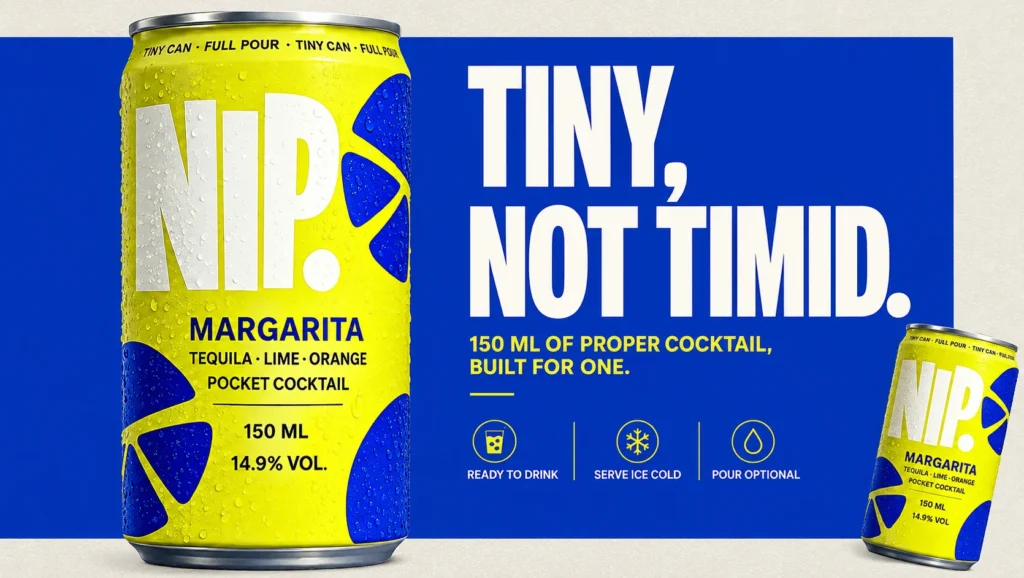
NS: Probably the idea that branding begins and ends with how something looks. I understand why that’s the most immediately recognisable part of the process, because it’s what people encounter first. But a visual identity is really only one expression of a much bigger idea. A brand is also how you communicate, how you make people feel, what you choose to stand for and whether those things are reflected in the actual experience of engaging with you.
I also think there’s a misconception that good design needs to be complicated or visually elaborate to demonstrate creativity. Some of the strongest ideas are incredibly simple. The challenge is arriving at that simplicity with enough intention that it communicates exactly what it needs to. For me, branding is less about decorating an idea and more about understanding it well enough to give it an authentic expression.
GH: Finally, if people walked away remembering just one thing about your work or philosophy, what would you hope it is?
NS: That I made them feel something. I’ve always been interested in the emotional side of storytelling, whether that’s through something I’ve written, an image I’ve created or an identity I’ve helped bring to life. I think so much of our experience of the world is shaped by the stories we tell about ourselves, our communities and the things we identify with. And having spent much of my career in spaces that allow me to contribute to those narratives, I’ve become increasingly conscious of the responsibility and privilege that comes with that.
I’m particularly passionate about telling stories that make people feel seen, especially stories that haven’t always been given the attention or consideration they deserve.
So I suppose I’d hope that people recognise a genuine curiosity and care in my work. That whatever I’ve created feels considered, that it communicates something meaningful, and that somewhere in the experience of engaging with it, there’s a moment of connection.
On a lighter note…
A project you’re especially proud of?
NS: I’m currently art directing and designing a coffee-table book celebrating 40 years of Metro FM, which has been an incredible opportunity to explore the relationship between music, culture and collective memory. There’s something really special about helping preserve the history of an institution that has been part of the soundtrack to so many South African lives.
One creative habit you’ll never give up?
NS: Walking and observing the world around me. Some of my favourite ideas have come from being completely removed from my screen, paying attention to nature, people, conversations and all the little things we tend to overlook when we’re in a hurry.
Brand building is…
NS: An exercise in understanding identity and translating it into something that other people can recognise, connect with and, hopefully, feel a part of.

Mase is Creative Director at Good Humans. She asks a lot of questions about brands, people and the spaces where the two meet or clash.